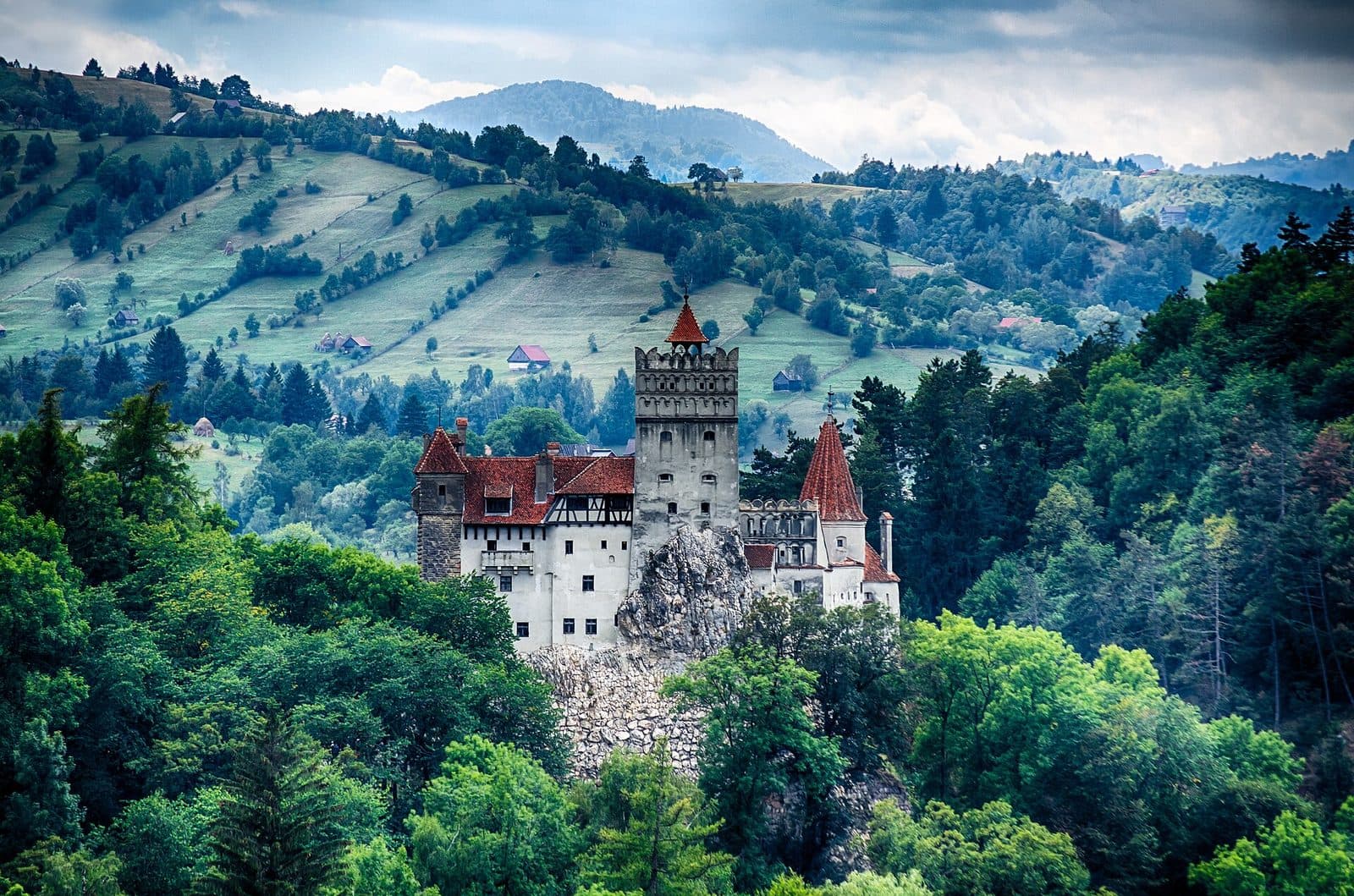
The Castle That Dracula Never Knew
Romania's clifftop fortress wears a vampire's reputation it never earned — the real story belongs to a customs house, a warlord who passed through, and a queen who loved it enough to leave her heart behind.
Perched on a rock spur above a mountain pass between Transylvania and Wallachia, Bran Castle was never built for terror. In 1377 King Louis I of Hungary authorized the Transylvanian Saxons of Brasov to raise it at their own expense, and by 1388 it stood complete — a fortress and customs house guarding the trade route through the gorge below. For centuries its business was tolls and defense against the Ottomans, not the supernatural.
The vampire arrived by accident, and from abroad. Bram Stoker never set foot in Romania. He conjured Count Dracula's castle from books in British libraries, and an engraving in the first edition bears a striking resemblance to Bran — close enough that the world quietly decided this must be the place. Bran is never named in the novel, and its real geography matches nothing Stoker wrote. The 'Dracula's Castle' label is a 20th-century invention, sustained by tourism rather than text.
Vlad III Dracula, the Impaler whose cruelty seeded the name, has only the faintest claim here. Historians agree he never ruled or lived at Bran. He passed through the gorge below more than once, and some accounts hold he was briefly imprisoned in the area after his 1462 capture by Matthias Corvinus — though many scholars place that captivity in Budapest instead. His true stronghold was Poenari, a ruin on a far steeper Wallachian cliff. Bran's spine-tingling silhouette simply photographed better.
The castle's most genuine love story is royal, not gothic. In 1920, after the Treaty of Trianon, the city of Brasov gave Bran to Queen Marie of Romania, who made it her favorite retreat. She whitewashed the grim interiors, filled the towers with carved furniture and flowers, turned defensive nooks into reading alcoves, and even had an elevator installed in the old rock-cut well so she could descend straight to the park. During her renovations a forgotten passage was rediscovered — a narrow stair, long sealed, linking the floors like a secret the castle had kept to itself.
Marie loved Bran so completely that she willed her heart to it. After her death in 1938 her heart was sealed in a jeweled silver casket, wrapped in the flags of Romania and England, and laid in a seaside chapel at Balchik. When that coast was ceded to Bulgaria in 1940, the casket was carried home and walled into a crypt cut from the mountain rock across the valley from Bran. The communists later smashed the grille and seized it; the heart spent decades in museum storage before finally returning to royal ground. The castle the world visits for a fictional vampire is, in truth, the keeper of a real queen's devotion.
“"Bram Stoker never visited Romania. In describing the imaginary Dracula's Castle, he based his work on a depiction of Bran Castle available in England." — the official Bran Castle”
Curiosities & Legends
- 01Bram Stoker never visited Romania or Transylvania — he built Count Dracula's castle entirely from descriptions and sketches found in British libraries, and Bran Castle is never actually named in the novel.
- 02Vlad the Impaler never ruled or lived at Bran; his real fortress was Poenari, and historians dispute even the claim that he was briefly imprisoned near Bran after his 1462 capture.
- 03Bran began life in 1377 not as a lair but as a fortified customs house, collecting tolls on the trade route through the mountain pass between Transylvania and Wallachia.
- 04Queen Marie of Romania received the castle as a gift from the city of Brasov in 1920 and turned the dark fortress into a sunlit home in her 'Balcic' style, complete with an elevator built into the medieval well.
- 05A secret stair hidden behind the walls — long forgotten — was rediscovered during Queen Marie's renovations, connecting the castle's floors through a concealed passage.
- 06Queen Marie's heart was sealed in a jeweled silver casket and, after journeys from a Black Sea chapel through war and communist-era museum vaults, came to rest near the castle she loved most.
Source & further reading: Wikipedia, Encyclopaedia Britannica & the official Bran Castle archive
Experience this place yourself — woven into your transformation journey.