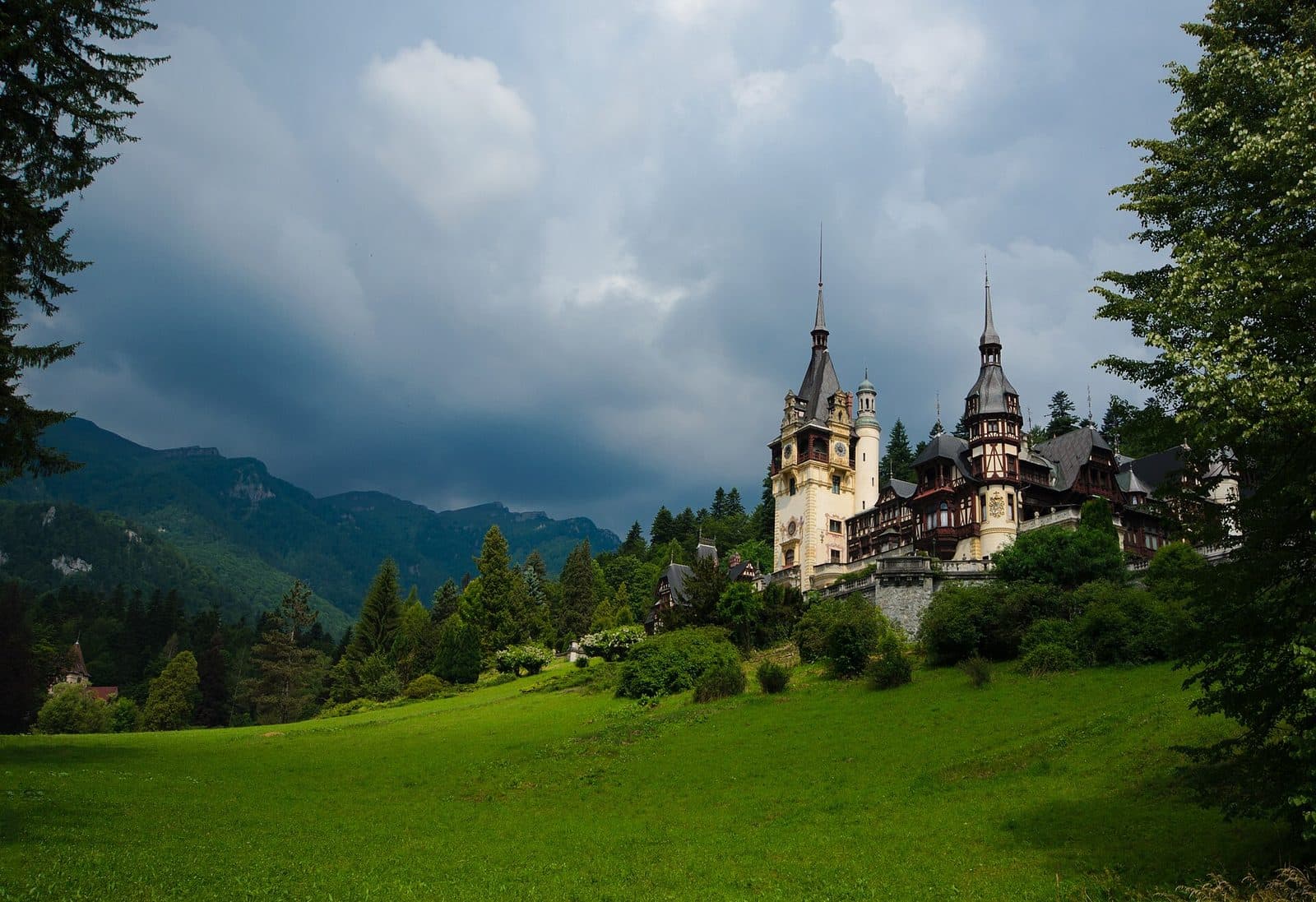
Peles Castle: The Fairy-Tale Palace That Lit Its Own Fire
Hidden in the Carpathian forests above Sinaia, King Carol I built the most technologically advanced castle in 19th-century Europe — with its own power station, a ceiling that opens to the stars, and a legend that whispers of death.
In 1866, a young German prince of the Hohenzollern-Sigmaringen line rode into the wild Carpathian valley above Sinaia and lost his heart to the mountains. Carol I, soon to be the first King of Romania, laid the foundation stone of his summer residence in 1873 and spent the next four decades turning a remote forest clearing into a Neo-Renaissance dream of carved walnut, Murano crystal, Cordoba leather walls, and nearly 170 rooms. The result, finished in stages until 1914, remains one of the most beautiful palaces in Europe.
What set Peles apart was not only its beauty but its astonishing modernity. While Europe's grand houses still flickered by candle and gas, Carol I harnessed the rushing waters of the Peles stream to drive a hydroelectric plant, making his castle the world's first fully powered by its own locally produced electricity. An electrical network was installed in 1884 and a dedicated power plant followed in 1897. From the very beginning the castle also enjoyed central heating, hot and cold running water, a telephone, a small royal elevator, and a built-in central vacuum system — luxuries that remain rare in Romania even today.
The Hall of Honor is the castle's theatrical heart: three storeys of emerald-painted walls and intricately carved timber, crowned by a vast stained-glass ceiling. At the touch of an electric motor, the roof retracts. On clear summer nights, Carol I's guests would look up through the opening to a canopy of real stars, fresh mountain air drifting down into the gilded hall. It was nineteenth-century engineering performing pure enchantment.
The castle keeps its secrets too. Behind the shelves of the Royal Library, stocked with some 30,000 volumes, a concealed one-way door opens directly into the king's private apartments — a hidden passage that let Carol I slip away from tiresome dignitaries. He spent his final weeks here as the First World War broke around him, and on 10 October 1914 the king who had conjured this fairy-tale palace died within its walls.
And then there is the White Lady. The Hohenzollern dynasty carried with it an old Germanic legend of the Weisse Frau, a pale spectral woman said to appear in the family's castles to foretell a death. At Peles, the tale tangles with the memory of Carol's wife, Queen Elisabeth — the poet known as Carmen Sylva — who drifted the halls in flowing white robes and was rumoured to hold seances. Historians find no curse, only a romantic queen and a castle so atmospheric it seems to invite ghosts. But on a misty Carpathian evening, the legend feels very much alive.
“"The first castle in Europe to light its own fire — and the only one where the roof opens to the stars."”
Curiosities & Legends
- 01Peles became the world's first castle fully powered by its own locally produced electricity, generated by a hydroelectric plant fed by the nearby Peles stream.
- 02The stained-glass ceiling of the Hall of Honor slides open by electric motor, letting royal guests gaze at the night sky from inside the castle.
- 03From its earliest days Peles had central heating, hot and cold running water, a telephone, a small elevator, and a central vacuum system built into its foundations.
- 04A hidden one-way door behind the shelves of the 30,000-volume Royal Library leads straight into King Carol I's private suite, his escape route from boring guests.
- 05King Carol I, founder of the castle and Romania's first king of the Hohenzollern-Sigmaringen line, died at Peles on 10 October 1914.
- 06The Hohenzollern 'White Lady' (Weisse Frau), a family death omen, became entwined at Peles with Queen Elisabeth, the white-gowned poet-queen who reputedly held seances in its halls.
Source & further reading: Peles National Museum (official) and Wikipedia
Experience this place yourself — woven into your transformation journey.