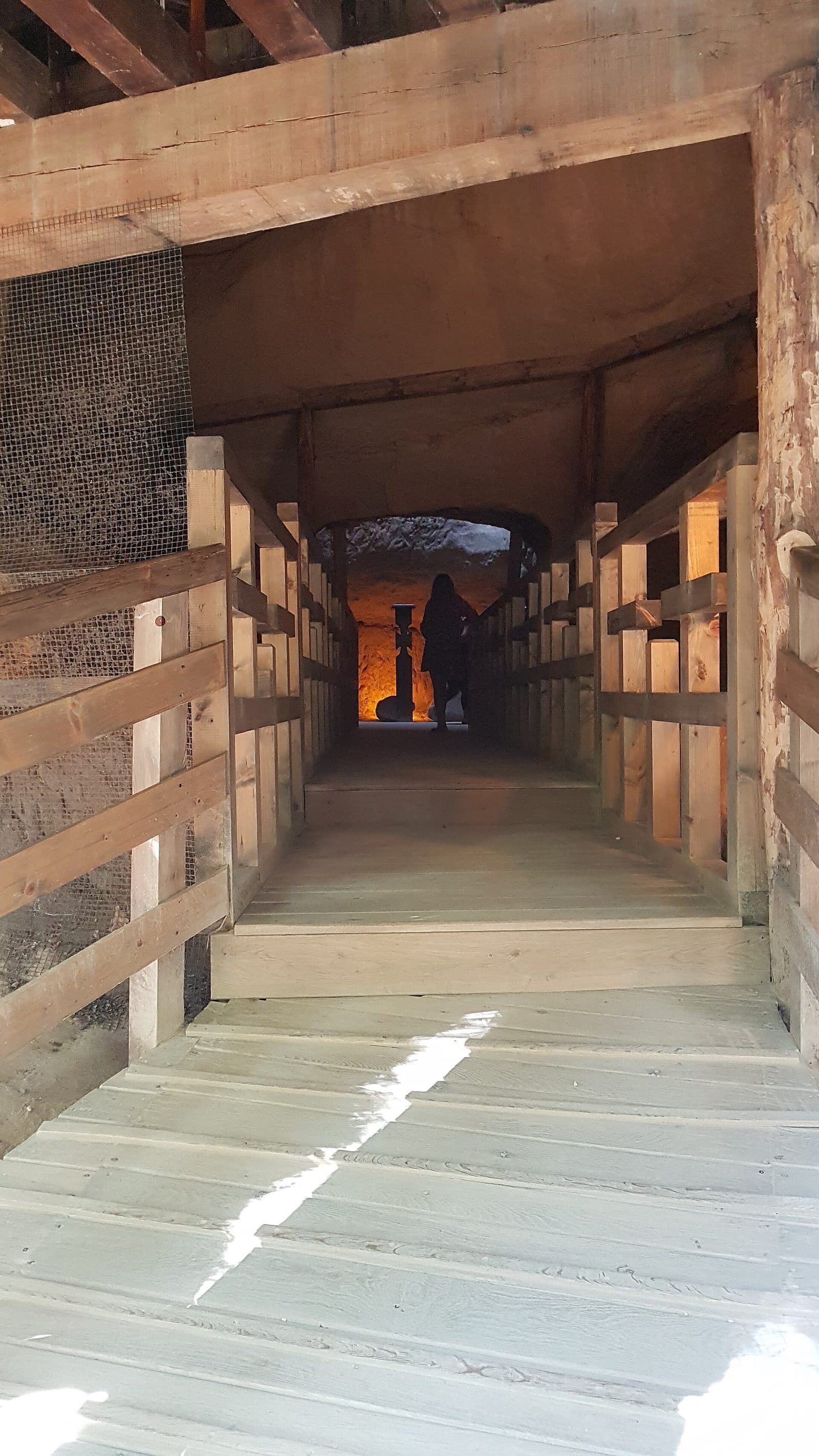
The Temple of Wishes: Sinca Veche's Sanctuary Carved Out of Time
In a Transylvanian hillside near Fagaras, a stone temple holds an altar marked by Jesus, the Star of David, and yin-yang, and a legend that wishes whispered beneath its open sky come true.
Hidden in the green folds of the Persani hills, a short walk above the village of Sinca Veche, a doorway opens into the living rock. Inside, five chambers were carved by hand from soft sandstone, two of them shaped into sanctuaries, each with its own altar. The only daylight falls through a single cone-shaped shaft bored straight up to the sky, a stone chimney that turns the room into a quiet column of light. Locals call it the Temple of Wishes, the Temple of Destiny, and, only half in jest, the Aliens' Temple.
What unsettles the scholars is the altar wall. Side by side, carved into the stone, are a face many believe to be Jesus Christ, a six-pointed Star of David, and a circle holding the yin and yang, three faiths and worldviews resting together where you would expect only the Christian cross, of which there is none. Specialists who have studied the site cannot agree on what it means, only that the combination has no easy explanation in any single tradition.
The age of the place dissolves into argument. The most cautious researchers tie it to persecuted Orthodox monks of the early 1700s, who, refusing to convert to Catholicism under Habsburg pressure, are said to have sheltered and worshipped in the rock; the people of the area later founded the nearby village of Sinca Noua rather than abandon their faith. Yet other voices push the temple back through Dacian times and as far as seven thousand years, into the late Neolithic, with no archaeological proof to settle it. So the estimates run wild, from roughly 250 years to several millennia.
The legend is gentler than the mystery. Stand beneath the open shaft with a pure heart, the tradition holds, and a sincere wish for good will be granted, especially on three holy days the locals favour: St. George's Day, the Lenten fast, and the Transfiguration. Pilgrims come for healing and for children, and they leave with stories. Some speak of crying voices in the empty chambers, of photographs spoiled by glowing white spheres that vanish from the screen, of cameras that fail without reason. Radiesthesia practitioners claim to have measured powerful magnetism and energy in the rooms. Believe what you will, the silence inside, lit by that single falling beam, makes a convincing case all on its own.
“Stand beneath the open shaft with a pure heart, and a sincere wish for good will be granted.”
Curiosities & Legends
- 01The temple holds five carved chambers and two altars, but only one altar sits directly beneath the cone-shaped opening that lets the sky pour straight in.
- 02Its altar wall pairs a face believed to be Jesus with a six-pointed Star of David and a yin-yang circle, yet contains no Christian cross at all.
- 03Age estimates span an extraordinary gap, from about 250 years to roughly 7,000, with some claiming Dacian or Neolithic origins and no firm archaeological proof either way.
- 04Records around 1700 describe Orthodox monks hiding here while being pressured to convert to Catholicism, and locals later founded Sinca Noua rather than give up their faith.
- 05Tradition names three days as the most powerful for wishes: St. George's Day, the Lenten period, and the Transfiguration.
- 06Visitors report glowing white orbs in their photos that vanish when reviewed, unexplained camera malfunctions, crying voices, and even claimed healings inside the chambers.
Source & further reading: Welcome to Romania — Sinca Veche, Temple of Wishes
Experience this place yourself — woven into your transformation journey.